

Adding AI-powered features to a product is no longer experimental. In 2026, it’s part of the roadmap for most companies.
The real problem is not using AI, but doing so without a minimum security policy that sets clear boundaries from the start.
Many organizations ship AI features relying on external providers, large data volumes, and fast-evolving models. Without a baseline security policy, the risk isn’t theoretical — it’s operational, legal, and reputational.
This article outlines a practical, realistic minimum policy that any company should define before putting AI features into production.
1. Data usage and classification: what goes in and what doesn’t
A common mistake is treating AI features like any other system component. They aren’t.
AI consumes data, transforms it, and in some cases learns from it.
A minimum policy must define:
- What types of data can be used as input.
- Which data is explicitly prohibited.
- The sensitivity level of each data source.
Not every available data point should be used. If the team cannot explain why a specific data element is needed, it probably isn’t.
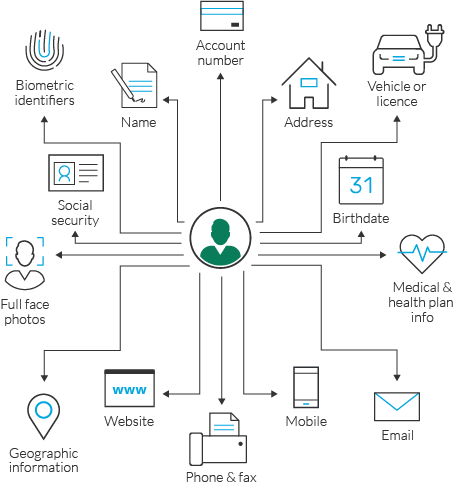
2. PII: clear rules, no implicit exceptions
Personally identifiable information (PII) requires special handling.
With AI features, the risk is not only storage, but processing.
Minimum requirements:
- Avoid PII whenever possible.
- Anonymize or pseudonymize data before sending it to models.
- Prohibit PII usage in prompts or training unless explicitly approved.
If a feature “works better” with PII, the question is not technical — it’s risk and compliance.
3. Data retention: how long data lives (and where)
Retention is one of the most overlooked aspects of AI projects.
What happens to the data after the model produces a response?
The policy must clearly state:
- Whether data is stored or not.
- For how long.
- In which systems and under which controls.
Indefinite retention by default is a bad practice. With AI, less retention usually means less risk.
4. AI providers: shared responsibility, not delegated responsibility
Using third-party APIs does not transfer accountability.
A minimum policy must define clear criteria for selecting AI providers.
At a minimum:
- Where data is processed and stored.
- Whether inputs are used to train their models.
- What opt-out, audit, and deletion options are available.
The provider is part of the system, not an external black box. If their data model isn’t understood, they shouldn’t be integrated.
5. Logging and traceability: no visibility, no control
AI feature outputs are often non-deterministic, which makes logging critical.
The policy should define:
- What gets logged (inputs, outputs, decisions).
- What is excluded for security or privacy reasons.
- How unexpected behavior is audited.
The goal is not to log everything, but to maintain enough traceability to explain what happened when something goes wrong.
6. Continuous review and updates
A minimum policy is not a static document.
Models change, providers evolve, and risks shift.
There must be:
- Periodic policy reviews.
- Validation when new features or significant changes are introduced.
- Clearly assigned ownership for enforcement.
AI security is not “set once.” It must be maintained.
AI in production: less improvisation, more judgment
Shipping AI features without a minimum security policy is a bet that nothing will go wrong.
Clear rules around data, PII, retention, providers, and logging don’t slow innovation — they make it sustainable.
At Diveria, we help teams bring AI into real products with a focus on quality, control, and technical responsibility from design onward — not as an afterthought.