
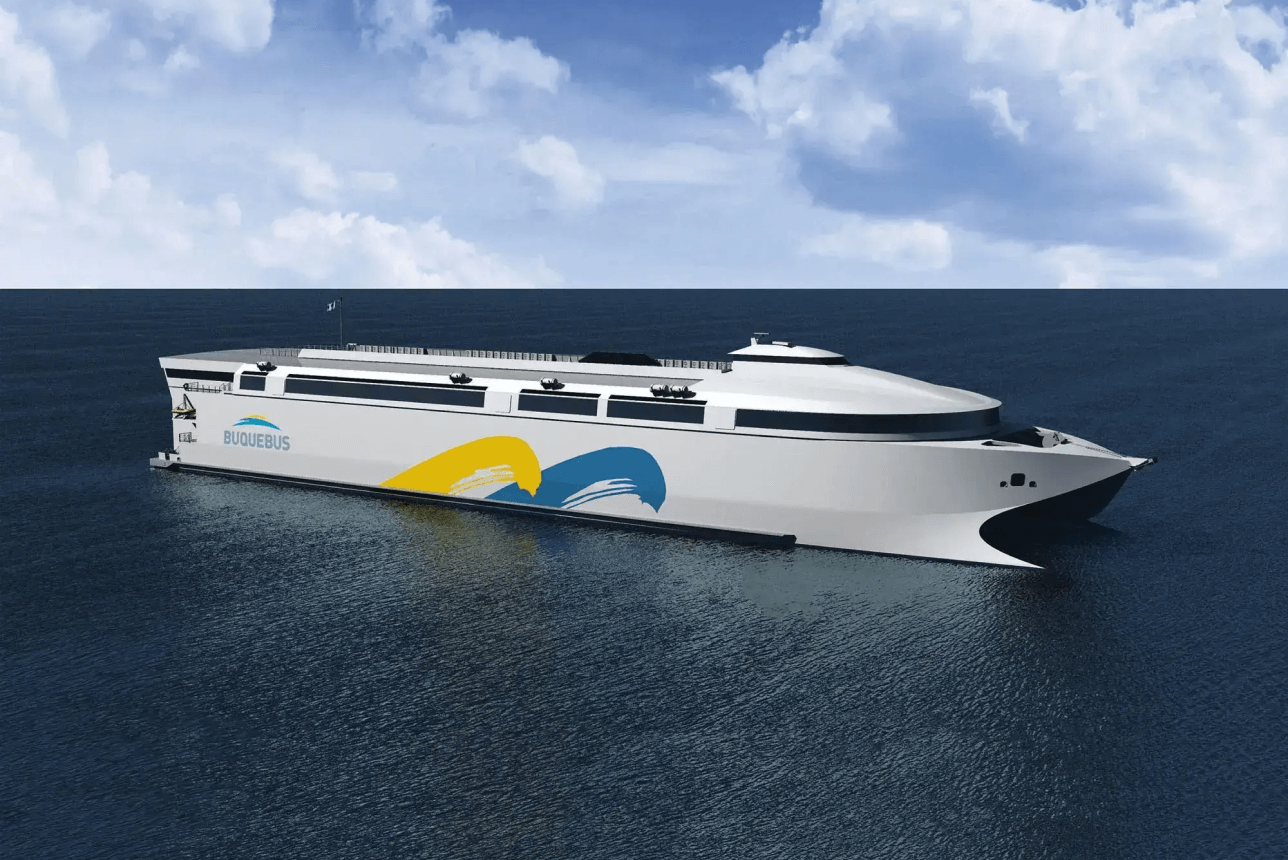
Buquebus is a leading company throughout the Americas in ferry passenger transportation, currently owning the largest ferry in the world and who will be acquiring the first electric ferry by 2025.
They contacted Diveria to redesign and rebuild their e-commerce website due to lack of scalability and technical limitations with the existing portal.
A professional team was assembled, including a project manager, front-end and back-end developers, QA specialists, UX/UI designers, and functional analysts.



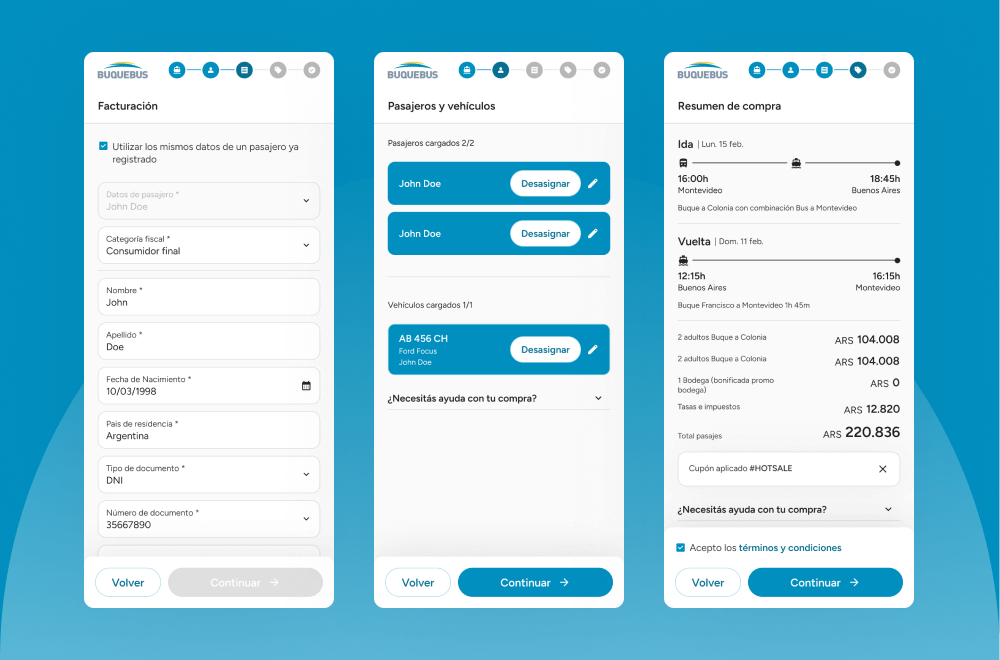

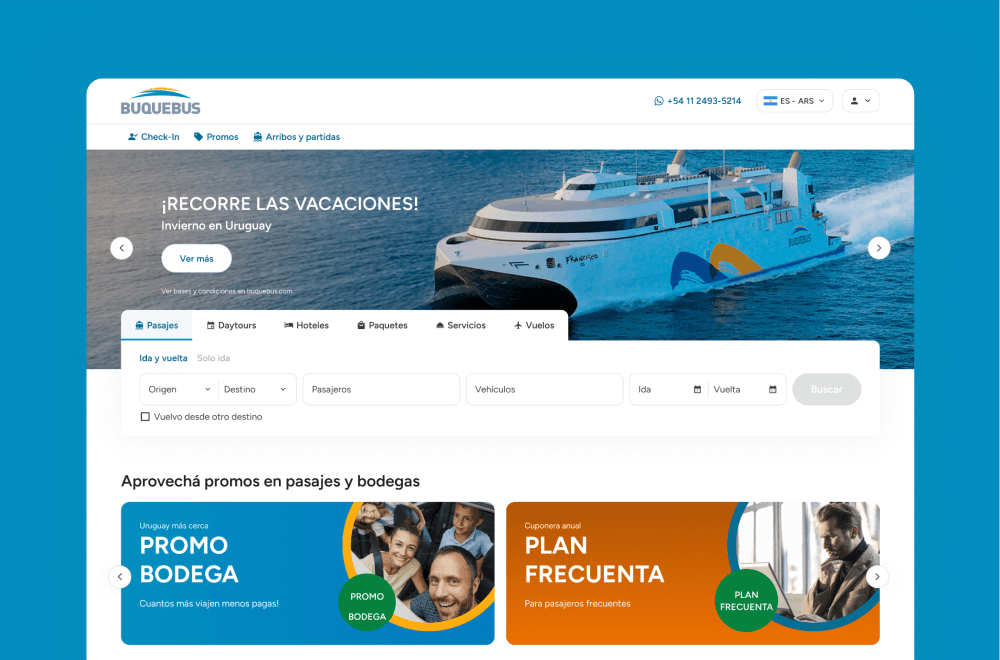










Buquebus needed far more than a facelift. Their sales portal crashed frequently under traffic peaks, had usability issues that were costing them sales, and was built on such tangled code that even small changes were hard to make, with no proper CMS to update content independently. So we built a completely new sales portal, designed to be scalable and easy to use and maintain.
We started with a UX audit of the full passenger journey and a complete redesign of the site, backed by feature-by-feature benchmarking and Quantum Metric data. On the technical side, we migrated the platform to an auto-scaling AWS infrastructure with real-time monitoring and alerts. The biggest challenge was orchestrating many moving parts at once: we integrated EDEA for bookings and pricing, Itaú for miles redemption, payment platforms and travel insurance providers, while coordinating requirements from marketing, support, pricing, tourism and SEO.
The portal was rolled out in stages, running alongside the old one to minimize impact on passengers, and every release goes through automated and manual QA. Today passengers can manage their whole trip in one place, with new features like online check-in and parking and onboard wifi sales.

The platform was migrated from on-premise servers to AWS, on an infrastructure that scales dynamically with demand. Load balancing spreads traffic across servers, and stress tests and security analyses were run before going live.
An alerting system warns in real time when a service goes down, when the conversion rate drops over a set period, or when the platform scales up or down. Key flows such as email delivery and invoicing are also monitored, along with APIs and external services, so incidents are caught and fixed early.
The portal connects with EDEA, the system that handles bookings and pricing, and with other external services: Itaú bank for miles redemption, cross-selling microservices for travel insurance sales, and payment platforms.
A new portal was built from scratch and rolled out in stages. During the transition, the old and new portals ran side by side in a hybrid model, so passengers barely noticed the change. Automated pipelines deploy to the different test environments.
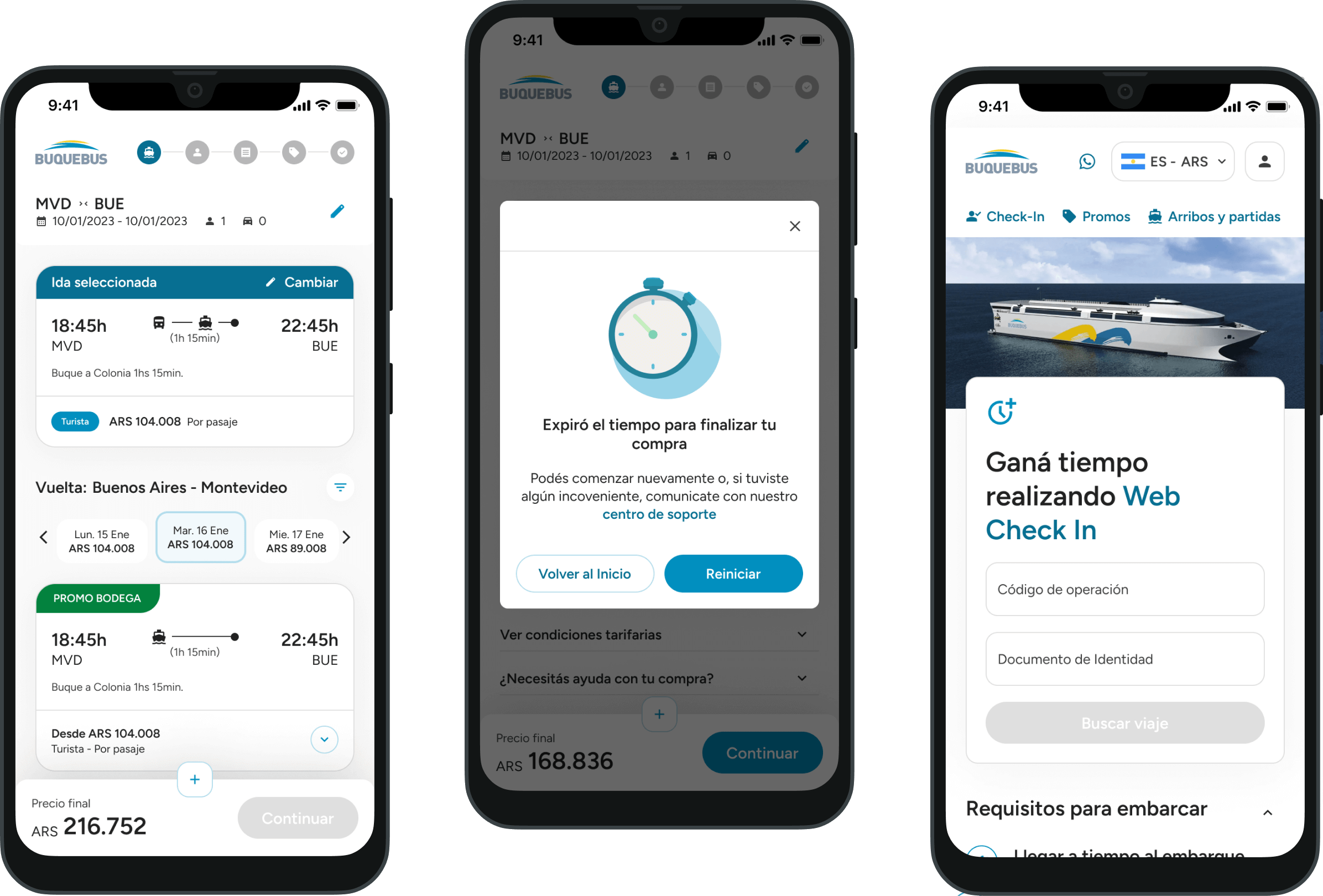
The entire portal was redesigned, with a new interface and a simpler, clearer booking experience for passengers.
The full passenger journey across the portal, from search to purchase, was audited to find friction points and opportunities for improvement that shaped the redesign.
For each new feature, the team studied how other companies in the market solved the same need, and used those references to make better design decisions.
Trends, sales funnels, and conversion and drop-off rates were analyzed across key flows, such as flexible fare or upgrade purchases. Clarity session recordings were used to observe the main friction points and propose concrete improvements.
A Playwright suite of automated tests runs before every deployment. It is complemented by manual QA, visual review and regression testing.
Online check-in, parking sales, onboard wifi sales and Universal Assistance policy delivery were added to the portal, so passengers can manage their whole trip in one place.
Requirements from marketing, support, pricing, tourism and SEO were coordinated to centralize and prioritize each team’s needs within the project.


